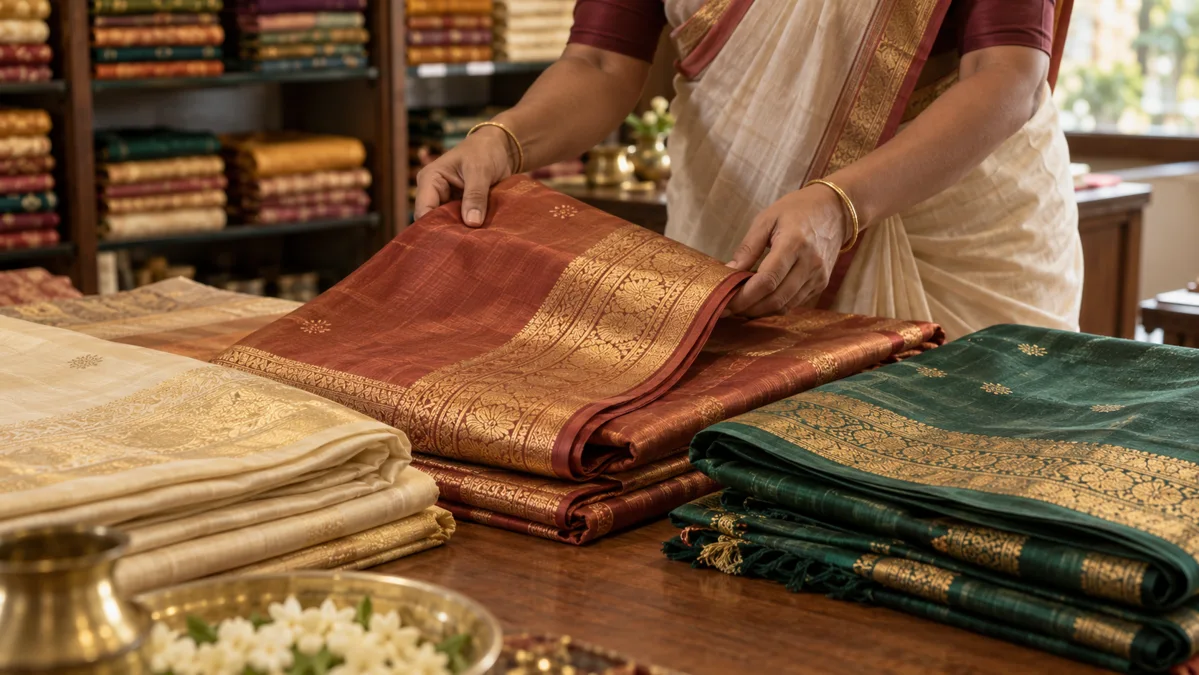
A practical content list covering fabric guides, occasion collections, product details, care, showroom information and wholesale questions.
A useful textile content plan starts with the questions people ask while choosing a product. These seven ideas are an editorial starting point. Validate them against your catalogue, customer conversations and search data before creating new pages; this is not a keyword-volume study.
1. Fabric and weave guides grounded in your stock
Explain the differences your team regularly discusses with customers. Use accurate descriptions, your own product examples and clear care information. If you sell only a small selection of a weave, avoid presenting the business as an authority on every possible variation. Link the guide to relevant products that are actually available.
2. Occasion collections with clear selection criteria
Help a shopper understand which products you have selected for an occasion and why. An editorial introduction can explain weight, styling or price considerations without treating every customer’s preference as the same. Keep the collection navigable and update unavailable products rather than leaving a dead shopping journey.
3. Product-detail answers that remove uncertainty
Build a checklist for the information customers repeatedly request: length, blouse-piece inclusion, material, finish, colour representation and what arrives in the package. Put the answer on the product page where appropriate. A separate blog post for every small question can make information harder to find.
4. Practical care and storage instructions
Use instructions appropriate to the material and supported by the supplier or your product expertise. Clarify when professional care is needed. A useful care guide can support existing customers as well as prospective buyers; it should not promise that one method is safe for every saree.
5. Showroom information for an actual visit
Create accurate information for genuine locations: address, opening hours, contact route and what customers can explore. If appointment booking is available, explain how it works. Avoid creating pages for locations where you do not have a relevant presence or service.
6. Wholesale questions answered separately
Trade customers may need catalogue access, minimum-order information, supply details and an appropriate enquiry route. Clearly separate wholesale information from retail shopping. The goal is to help a relevant buyer qualify the opportunity, rather than encourage every visitor to send the same generic message.
7. Collection stories supported by real expertise
Explain a collection’s sourcing, design or craft story using information you can substantiate. Credit relevant contributors and use original photography where available. Distinguish a brand’s own experience from a general claim about an entire craft tradition.
How this supports SEO, AEO and GEO
Make the answer clear, keep pages accessible and connect related guides, collections and products. In my approach, the same useful page should support a reader’s question and give search systems an understandable account of the business. Google’s AI features guidance connects eligibility with foundational search requirements and helpful content; publication does not guarantee inclusion or citation.
Pick the next useful page
Start with an unanswered customer question and a relevant part of your catalogue. Decide where the answer belongs, identify the person who can verify it and link to a sensible next step. Measure search visibility alongside enquiries and sales outcomes where you can.
See the textile and saree consulting page for the wider business journey, or read the Singhania’s project for documented Shopify and search work.